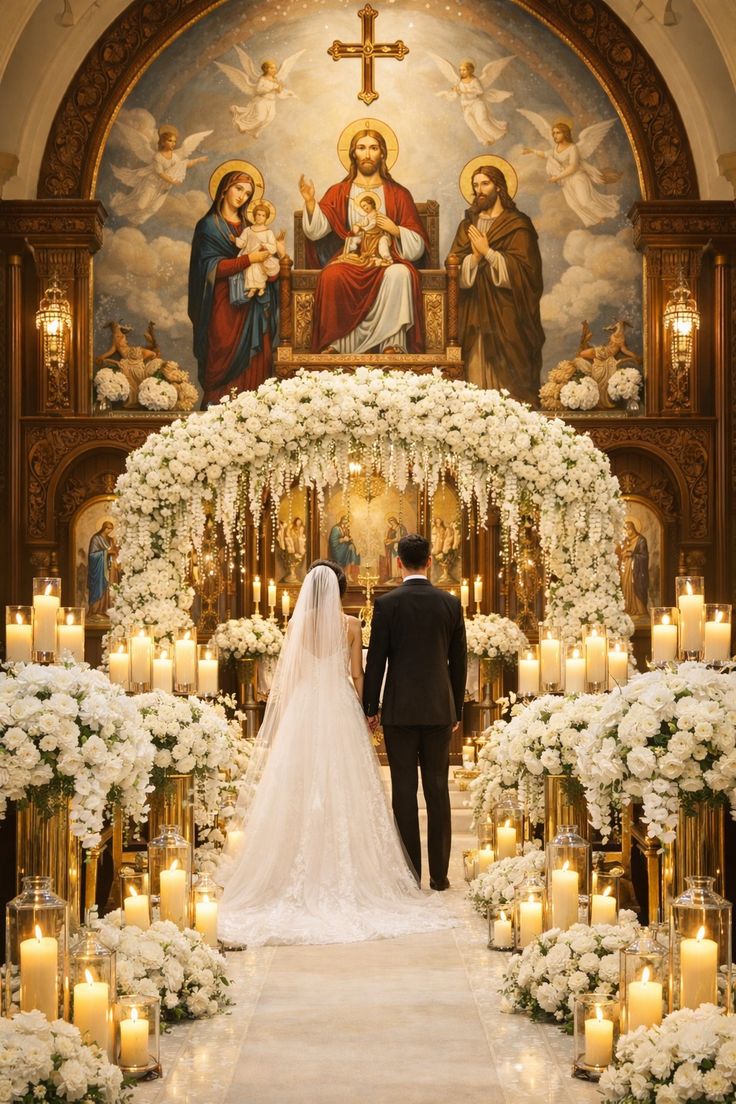

Religious ceremonies form the spiritual center of Indian weddings. Hindu weddings often involve sacred fire rituals, mantras, vows, garland exchanges, and seven symbolic steps around the fire called pheras. Muslim weddings involve nikah ceremonies, Quran recitations, blessings, and marriage contracts. Sikh weddings include Anand Karaj ceremonies inside gurdwaras, while Christian Indian weddings involve church ceremonies, vows, and blessings.
The sacred fire in Hindu weddings symbolizes purity, divine witness, commitment, and spiritual connection. Couples take vows promising loyalty, love, support, and partnership during pheras around the fire.
Garland exchange ceremonies symbolize acceptance, respect, and mutual commitment between the bride and groom. Families often celebrate this moment with music, flowers, and emotional joy.
Indian weddings are deeply emotional because ceremonies involve blessings from elders, family speeches, emotional rituals, and symbolic transitions into married life. Farewell rituals such as bidaai are often emotional moments where brides leave their parental homes after marriage.
Photography and videography are extremely important in modern Indian weddings because couples want to preserve memories of ceremonies, emotions, fashion, décor, and family interactions. Cinematic wedding films, drone photography, pre-wedding shoots, and social media content creation have become highly popular.
Pre-wedding photography allows couples to create romantic images and videos before ceremonies. These shoots often take place at historical sites, beaches, gardens, mountains, luxury hotels, or scenic destinations.
Social media has transformed Indian wedding culture significantly. Instagram, YouTube, Pinterest, and wedding blogs influence fashion trends, decoration styles, choreography, photography ideas, and destination wedding concepts. Celebrity weddings strongly shape modern Indian wedding trends.