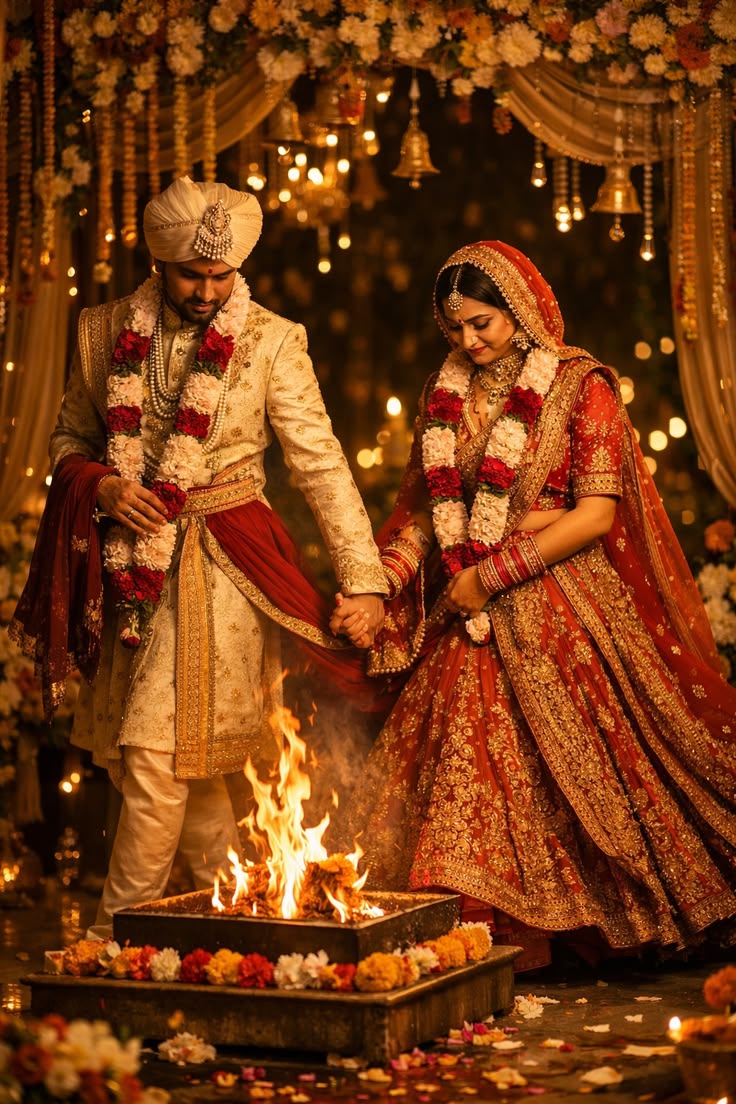

Jewelry plays a major role in Indian weddings because ornaments symbolize prosperity, family heritage, beauty, and tradition. Brides wear necklaces, earrings, bangles, maang tikka, nose rings, anklets, waist belts, and other traditional ornaments. Gold jewelry is especially important in Indian culture because it represents wealth and auspiciousness.
Indian groom fashion is equally elegant and culturally significant. Grooms often wear sherwanis, kurtas, bandhgalas, suits, or regional traditional attire paired with turbans, shawls, jewelry, and embroidered footwear. Luxury fabrics and handcrafted detailing are common in Indian menswear for weddings.
Wedding venues in India range from temples and family homes to luxury hotels, palaces, resorts, beaches, gardens, banquet halls, and heritage properties. Destination weddings have become highly popular among Indian couples, especially in locations such as beaches, mountain resorts, historical palaces, and international destinations.
Decoration is one of the most visually impressive aspects of Indian weddings. Flowers, lights, drapery, candles, stage designs, centerpieces, arches, and artistic installations transform venues into luxurious and colorful celebration spaces. Marigolds, roses, orchids, jasmine, and lotus flowers are frequently used in wedding décor.
Lighting design strongly enhances Indian wedding celebrations because colorful lighting, chandeliers, fairy lights, candles, and LED installations create festive and magical atmospheres. Wedding stages often become highly elaborate focal points for photography and ceremonies.
Food is an essential part of Indian weddings because hospitality and dining hold deep cultural importance. Indian wedding menus are usually extensive and include regional cuisines, sweets, beverages, appetizers, vegetarian dishes, non-vegetarian dishes, desserts, and live cooking stations. Guests often remember weddings through the quality and variety of food served.
Indian wedding processions, known as baraats in many communities, are highly energetic and celebratory traditions. The groom arrives at the wedding venue accompanied by family members, music bands, dancing guests, decorated vehicles, or horses. Baraats symbolize joy, celebration, and the arrival of the groom’s family.